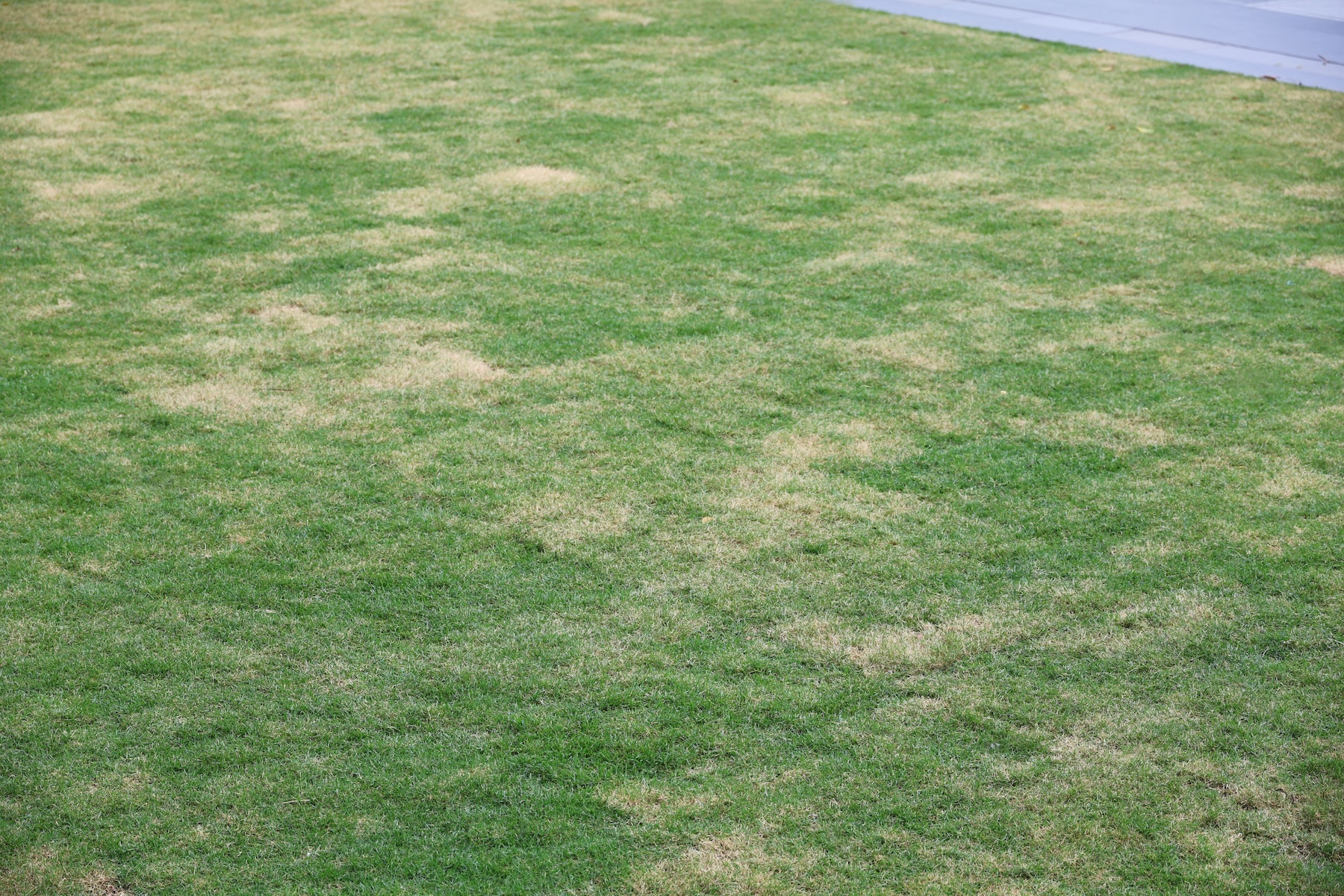
In spite of the recent rain, we are still considered to be in a moderate to severe drought in the Northern Virginia Area. Here’s what you need to know!
What Drought Stress Looks Like in a Lawn
1. Discoloration (blue‑gray → yellow → brown)
One of the earliest and most reliable indicators is color shift. Grass first turns a dull blue‑gray, then pale green, and eventually yellow or brown as chlorophyll production drops. This is the lawn’s attempt to conserve energy.
2. Blade Curling and Wilting
When moisture is low, grass blades curl inward or fold in half to reduce surface area and slow water loss. The lawn may look limp or flattened.
3. Thinning and Patchiness
Dry conditions cause grass to thin out, especially in sunny or high‑traffic areas. You may see bare soil, uneven patches, or irregular brown spots.
4. Slow or No Growth
If your lawn suddenly stops growing in May or June, it’s often drought stress. Grass may enter dormancy, conserving energy until moisture returns. Dormant grass looks dead but is usually still alive at the crown.
5. Dry, Crunchy Texture
Walk across the lawn and listen—drought‑stressed grass often feels crispy and breaks easily because the blades have lost internal water pressure.
6. Visible Footprints or Mower Tracks
If footprints remain visible for more than 10 seconds, the lawn lacks elasticity due to dehydration. This is a classic drought indicator.
7. Increased Weed Activity
Weeds like crabgrass and nutsedge thrive when turf is weak. If weeds suddenly surge, it often means the grass is stressed and losing competitive strength.
Cracked or Hard Soil
Severely dry soil becomes compacted, cracked, and difficult to penetrate with a shovel. This restricts root growth and makes recovery slower.
Why These Symptoms Happen
Drought stress reduces the water available for photosynthesis, nutrient transport, and cell structure. To survive, grass:
- Reduces leaf area (curling)
- Slows growth (dormancy)
- Shifts energy to root survival
- Sacrifices color to conserve resources
These are protective mechanisms, not necessarily signs the lawn is dying.
What Your Lawn Needs Now
May usually kicks off the season of fast lawn growth—but when drought settles in, your grass shifts from thriving to surviving. With hotter days and little rainfall, the goal isn’t perfection; it’s protecting your lawn’s root system so it can bounce back when moisture returns.
Watering Wisely
Deep, infrequent watering is the key. Aim for ½–1 inch once or twice a week, early in the morning. This pushes moisture down to the root zone and reduces evaporation. If your lawn goes dormant, light watering every few weeks is enough to keep roots alive.
Mow For Survival
Raise your mower blade to 3–4 inches. Taller grass shades the soil, slows evaporation, and reduces stress. Keep blades sharp and leave clippings on the lawn to help retain moisture.
Protect The Soil
Healthy soil holds water longer. Add compost when possible.
Reduce Stress
Limit foot traffic and heavy use. Dry grass is fragile and more prone to damage.
The Bottom Line
A drought‑stressed lawn isn’t a failure—it’s a lawn conserving energy. With smart watering, taller mowing, and gentle care, it will recover quickly once rain returns.
Please feel free to reach out with any questions or concerns, we are always happy to provide answers! 540-216-3145