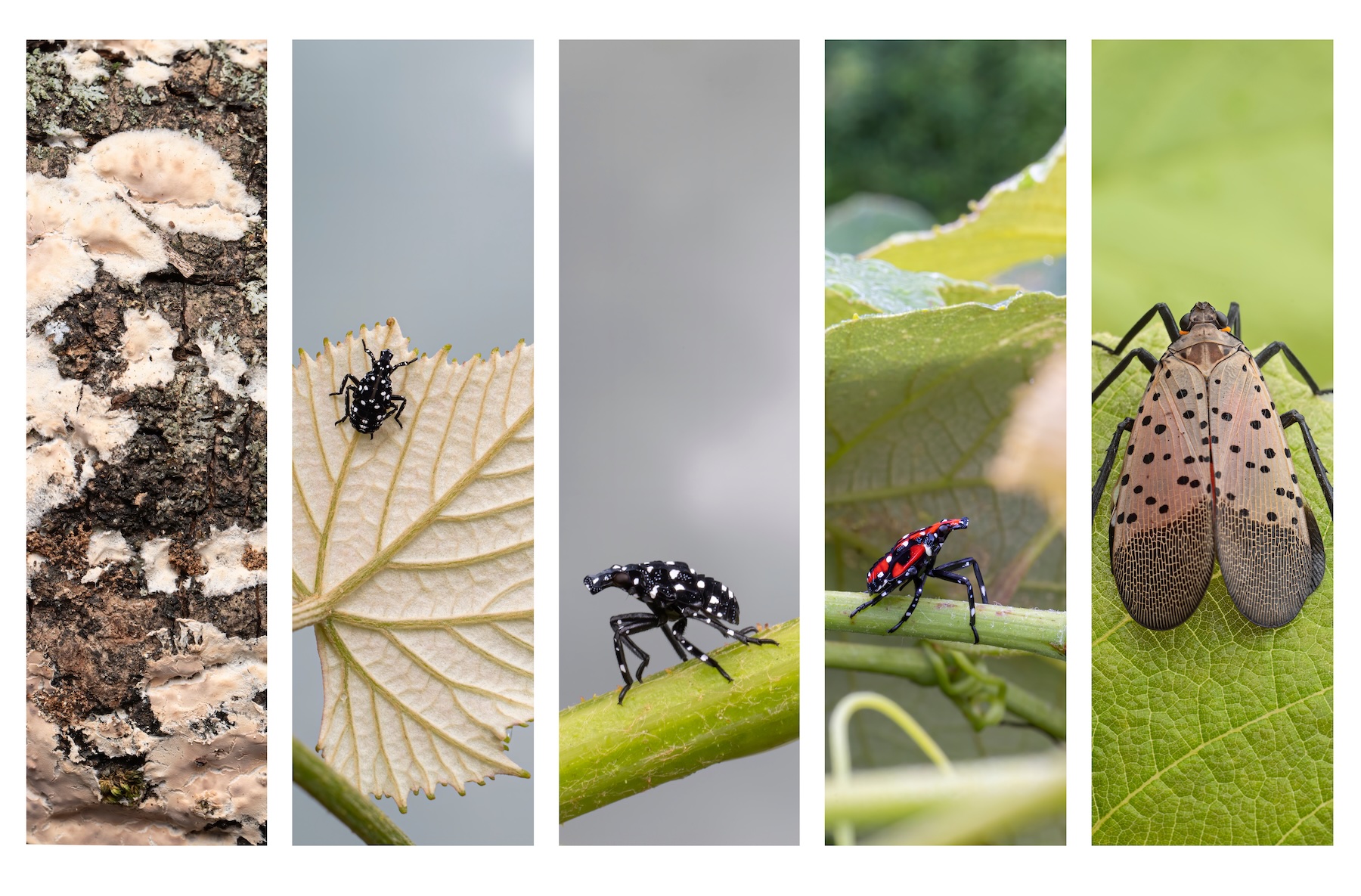
Northern Virginia is now firmly within the range of the spotted lanternfly (SLF)—an invasive planthopper first detected in the region in 2018 and now present across more than half of Virginia’s counties. Their spread has accelerated along railways, highways, and other transportation corridors, making them a familiar sight in backyards, parks, and vineyards.
Adult lanternflies are about 1 inch long, with brown forewings covered in black spots and striking scarlet hindwings. Their nymphs begin as small black insects with white spots before turning red as they mature.
Egg masses—often found on trees, outdoor furniture, vehicles, and even rocks—are 1–1.5 inches long, grayish-brown, and mud-like in appearance.
Seasonal Activity in NoVA
Residents typically begin noticing nymphs in spring, with adults becoming abundant by mid‑July. Egg‑laying begins in September and continues into November, after which winter temperatures kill off surviving adults.
Because SLFs reproduce rapidly, experts expect 3–5 years of heavy infestation before populations stabilize—though they are unlikely to disappear entirely.
What Harm do they Bring?
While SLFs don’t bite or harm humans or pets, they do feed on sap from more than 70 plant species, including:
- Grapevines
- Fruit trees
- Maples
- Black walnut
- The invasive Tree of Heaven, their preferred host
This feeding weakens plants, stresses vineyards, and can cause cascading ecological effects. At Green Horizon, we are preparing for a fall Tree and Shrub Care campaign, give us a call to learn more and secure your treatments for the fall!
How Northern Virginia Residents Can Help
Experts recommend a combination of vigilance, manual removal, and targeted management:
1. Destroy Egg Masses
Scrape them with a card into a bag containing rubbing alcohol or hand sanitizer, then dispose of the sealed bag in the trash.
2. Remove Tree of Heaven
This invasive tree fuels SLF populations. Removing it reduces local breeding sites.
3. Squash Adults and Nymphs
It’s crude but effective—and encouraged by state agencies.
4. Use Insecticides Carefully
Both contact and systemic insecticides can kill SLFs, but they also harm pollinators and beneficial insects. Experts warn against overuse and emphasize following label instructions.
5. Avoid Sticky Traps
These can unintentionally kill birds and small mammals.
6. Check Vehicles and Outdoor Gear
SLFs spread by hitchhiking on cars, trailers, and equipment. Inspect items before traveling.
The Future of SLFs in NoVA
Some entomologists believe SLFs may eventually become just another garden nuisance, as natural predators (including birds and possibly bats) begin to adapt. But for now, community awareness and responsible management remain essential.
Please give us a call if we can provide any additional information, always happy to hear from our valued customers. 540.216.3145