


This time of year, with hot days and warm humid nights, can lead to the development of fungus in the lawn. Below, we’ll review some of the most common fungal diseases, conditions which may lead to their development, and how to prevent or treat, if necessary.
Conditions Leading to Fungal Diseases
- High humidity
- Nutrient deficiencies
- Excessive thatch leading to poor air circulation
- Poor drainage
- Soil compaction
- Overwatering, especially at night
- Mowing infrequently/leaving clumps of clippings
Red Thread
Red Thread is a fungal disease that typically appears in early spring and late summer to fall, affecting various grass types, particularly perennial ryegrass and fine fescue. The fungus can overwinter in soil and plant debris, allowing it to resurface when conditions are suitable. If you had it last Spring, you may see it again this year! It thrives in temperatures between 65°F and 75°F with prolonged periods of rain or humidity.
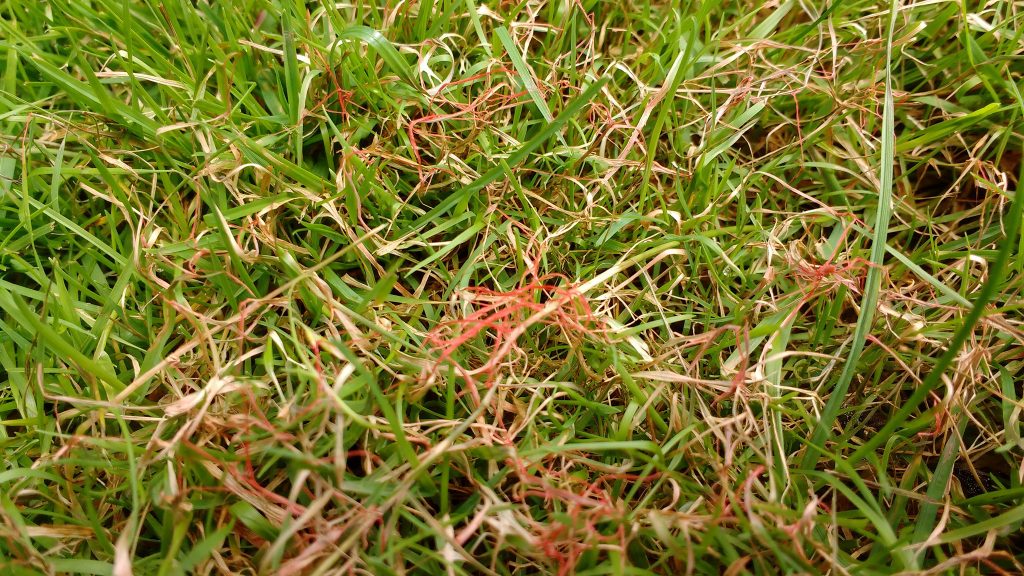
“Red Thread Disease on Lawns” by Kris Lord (The Lawn Man) is licensed under CC BY 2.0.
You may notice circular tan or pink patches of grass about 4-8 inches in diameter. When looking closely, you will notice the small, red threads protruding from the grass blades, especially the tips. Red thread affects the leaves, leaf sheaths, and stems without killing the entire plant, unless the outbreak is severe. The affected leaves will dry out and turn a bleached straw color. Unless the weather conditions last a long time, the appearance of the red threads signal the end of its activity. With proper management and timely treatment, red thread can be controlled. While it may cause temporary unsightly patches, a well-maintained lawn can typically recover from red thread infections.
Dollar Spot
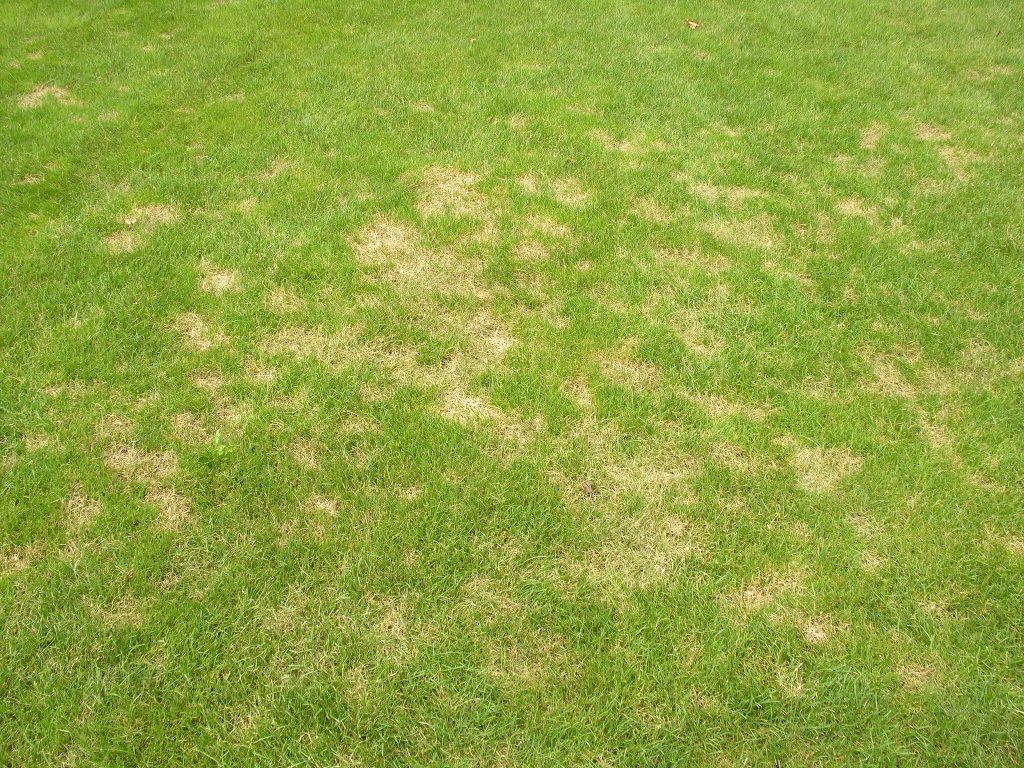
Dollar Spot is a warm-season fungus that can cause significant damage to various grass types, including Kentucky bluegrass and bermudagrass. You may observe small, circular patches of dead grass about the size of a silver dollar and cobweb-like growth between grass blades in the morning dew. Dollar spot can kill entire grass plants if left untreated, often requiring reseeding. This fungal disease is most frequently found during period of warm, humid days paired with cool nights. With proper management and timely treatment, dollar spot can be controlled, but it requires vigilance and consistent care to prevent recurrence and spread.id conditions.
Summer Patch
Summer Patch is a destructive disease that affects the roots of turfgrass, particularly during the hottest summer months. You may see circular patches of dead grass, ranging from a few inches to several feet in diameter, which may have a “frog-eye” pattern with green grass in the center of dead patches. The wilted, off-color grass progresses to a straw-like appearance. Summer patch is most prevalent when soil temperatures are above 65°F, when lawns are mowed too low or “scalped,” or with poor drainage and soil compaction.
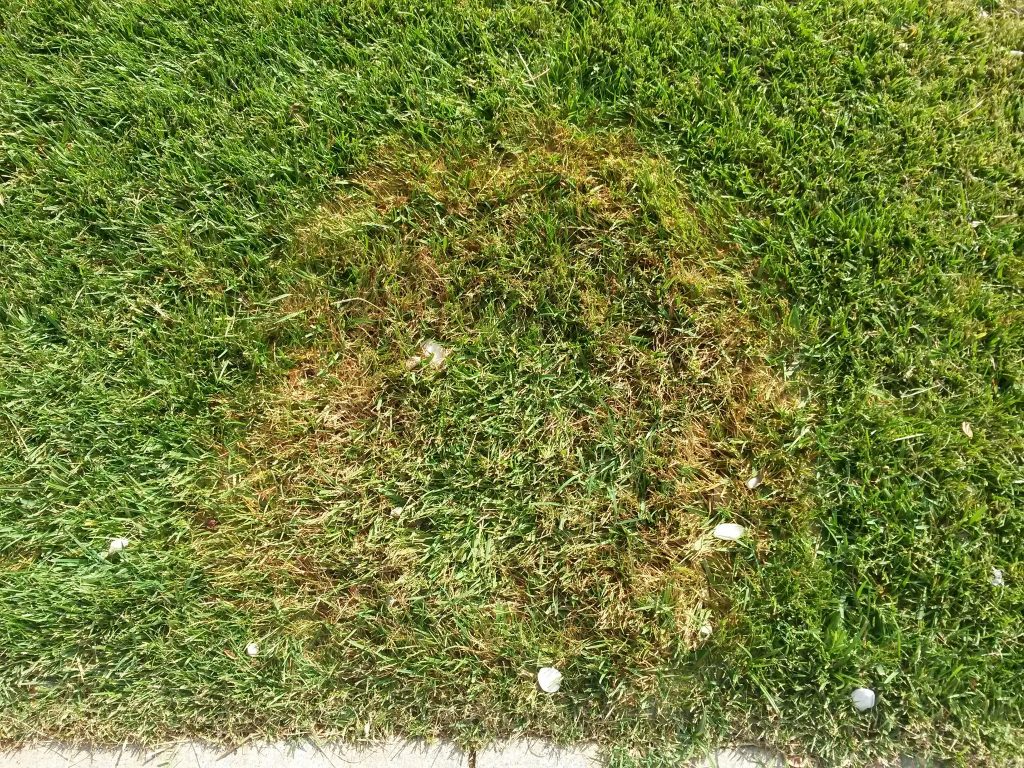
“Turfgrass: Fungal disease, poss. summer patch” by Plant pests and diseases is marked with CC0 1.0.
Brown Patch
Brown Patch is a common problem in Virginia lawns during hot, humid weather. It can spread rapidly under favorable conditions, particularly during periods of high humidity and temperatures between 70°F and 90°F34. The fungus can overwinter in soil and infected plant debris, allowing it to resurface when conditions are suitable.
Brown patch weakens the roots of the grass but does not always kill it. However, it can cause significant damage to lawns, especially in susceptible grass types like tall fescue.
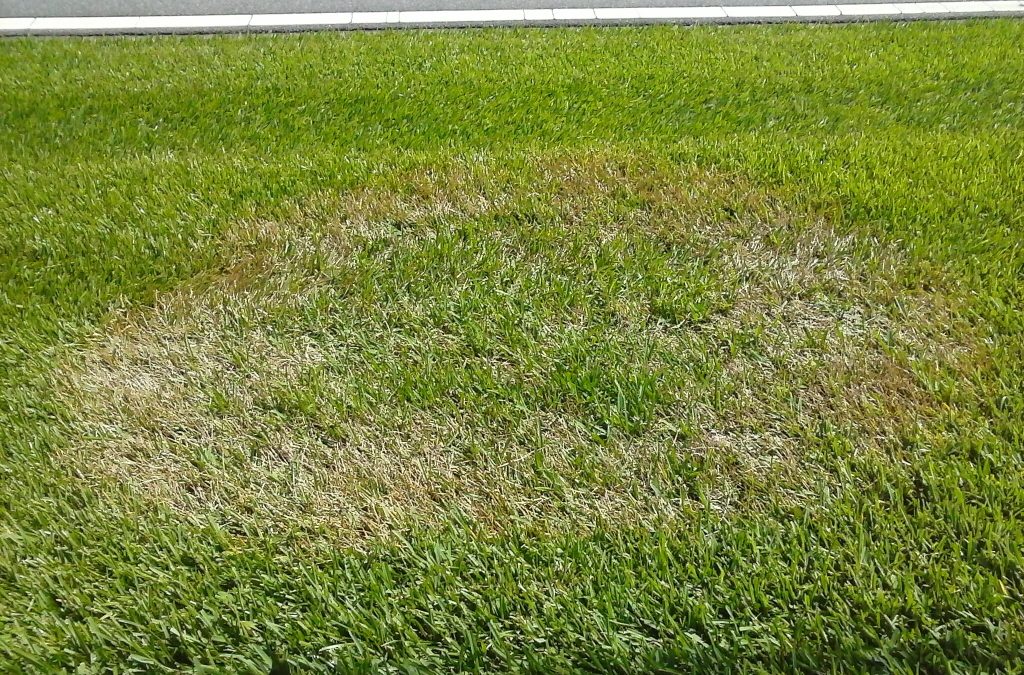
You may notice circular patches of dead, tan grass up to 3 feet in diameter, and having smoky, grayish margins around affected areas. There is a possibility of having a “frog-eye” pattern in some cases. Brown patch often affects lawns which are overwatered, especially during the evening, and lawns with heavy thatch buildup, during period of high heat and humidity.
NOW that you know what it is, what can be done to help prevent it?
Because fungal diseases thrive in moist conditions, lawns with heavy thatch may be more susceptible to disease due to the entrapment of moisture.
It is imperative that lawns be mowed regularly at a height of 3-4” to avoid stressing the grass, and rake or bag clippings, or make sure not to leave clumps on the lawn. Regular mowing in the spring may mean two (2) times per week to avoid leaving long, thick clippings on the lawn.
Minimize stress factors on the lawn such as excessive foot traffic or compaction.
When watering, water deeply but infrequently to encourage deeper root growth. Water early in the day to allow the grass to dry. (see Watering Tips HERE)
By partnering with our experienced lawn care team, you can protect your lawn from these common fungal diseases and maintain a healthy, beautiful landscape throughout the year. Our comprehensive lawn care programs are tailored to Virginia’s unique climate and grass types, ensuring your turf receives the best possible care.
Don’t let fungal diseases compromise the beauty of your lawn! Contact us today! If you have any other questions or are unsure if your lawn needs a fungicide treatment, please email office@greenhorizonva.com or text/call us at 540-216-3145.


